Buying New Construction in Frederick County
What the builder won't tell you.
The friendly rep at the model home works for the builder. The contract, the incentives, the upgrades — all of it is built around their interests. Here's the same walkthrough I give my own buyers, from your side of the table.
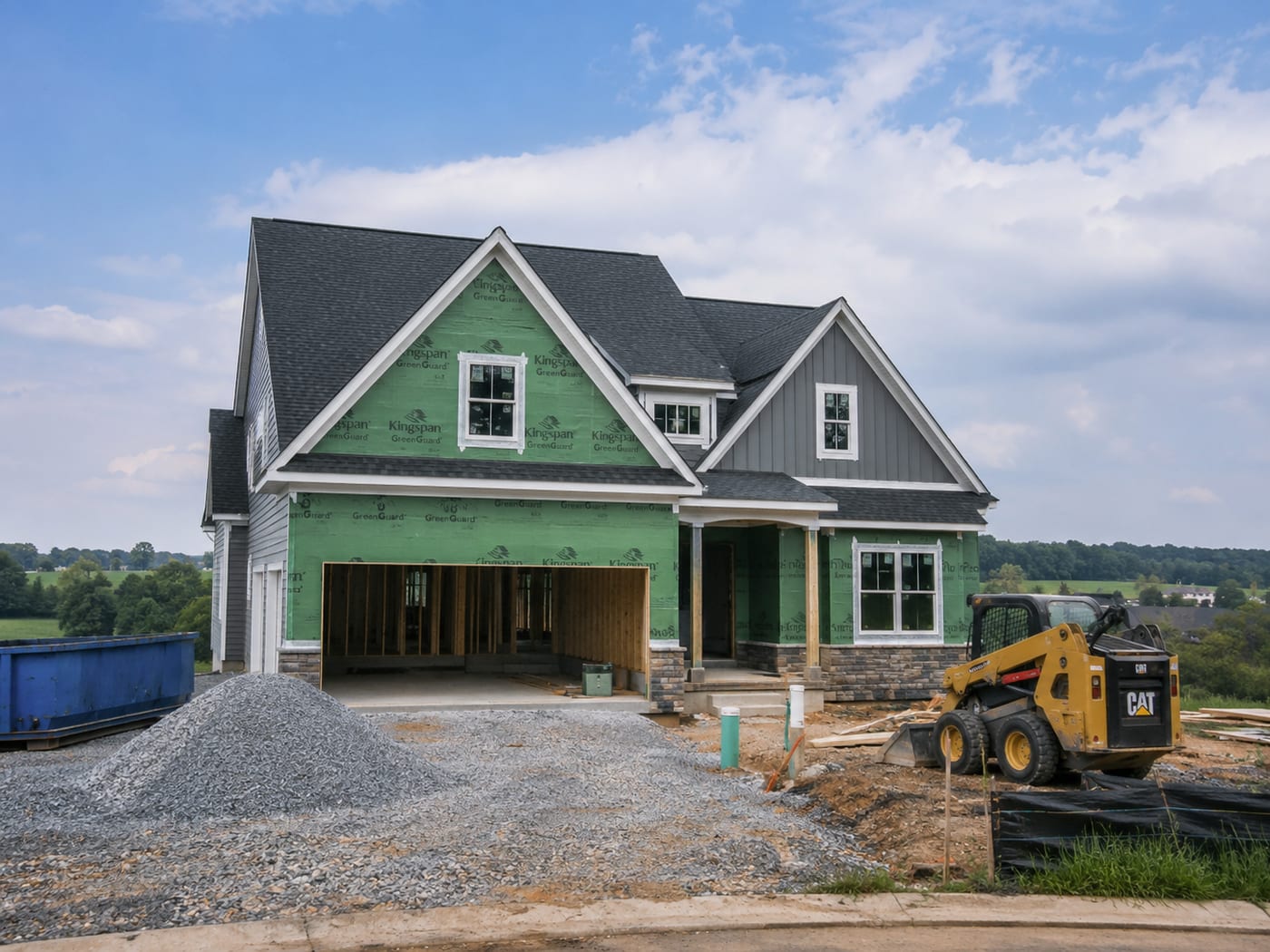
New always looks easy. That's the point — "new and easy" is a feeling the sales process is designed to give you, and it can quietly cost you real money.
I've walked buyers through plenty of Frederick new builds. I know where the traps sit, which incentives are worth chasing, and where people give up leverage without realizing it. This guide is the buyer's-side view the model home won't give you.
Each section below is a doorway into a deeper post. Read straight through for the full picture, or jump to the question that's on your mind today.
Is buying new construction different from buying a resale home?
Yes — and the biggest difference isn't the drywall smell or the warranty. It's whose interests the process serves. With a resale, there's a listing agent on their side and, ideally, an agent on yours. With new construction, the friendly person at the model represents the builder on every deal in that community — and the contract you'll sign was written by the builder, for the builder.
That doesn't make new construction a bad choice. It makes it a different game, with rules most buyers only learn after they've already given something away. The rest of this guide is those rules.
Do you need your own agent for new construction?
Yes — you want your own agent representing you, because the onsite rep works for the builder, not for you. Your agent negotiates on your behalf, reads the builder's contract critically, and advocates for you through inspections and delays. But here's the catch that trips up more buyers than anything else in this guide:
On cost: buyer representation and agent compensation in new construction changed with the 2024 industry settlement, and the details are worth confirming for your exact situation rather than assuming.What I can tell you plainly is that walking in without your own representation almost never works in your favor.
Read the full post: do you need your own agent? →How does the builder's sales process actually work?
It's a sales funnel, and the rep's job is to keep you moving through it. The model home is a showroom, not the home you'll get — it's loaded with upgrades to set your expectations high. The contract looks standard but differs from a resale contract in ways that favor the builder on timelines, change orders, and remedies.
Signing before your agent reviews the contract · accepting the preferred lender without comparing · treating the model's upgrade list as the baseline · agreeing to build timelines with no cushion. Each feels small in the moment; together they add up.
What are builder incentives really worth?
Often genuinely valuable — rate buydowns and closing-cost credits can beat what you'd find on your own — but they usually come with strings, most commonly using the builder's preferred lender or title company. The skill is telling real savings from money that just shuffles the price around.
Compare the preferred lender against one or two outside quotes— don't assume the builder's is the best deal. This is education, not lending advice.
Read the full post: real incentives vs. bait →Which upgrades are worth it, and which are traps?
The rule of thumb: pay for what's hard to change later, skip what isn't. Structural options, rough-ins, and anything behind the walls are worth doing now. Cosmetic finishes are usually marked up in the design center and can often be done cheaper after closing.
The trap is blowing your budget on finishes that feel exciting in the showroom instead of the structure that actually helps resale. Set your upgrade number before you walk in.
Read the full post: upgrades worth it vs. traps →What communities are being built right now?
Frederick County has active new-construction communities across several areas, with prices spanning a wide banddepending on builder, size, and lot. Each carries real trade-offs the marketing won't lead with: commute, build timelines, HOA structure, and lot premiums.
I frame communities by how you'll live day to day — commute, amenities, budget — never by who a place is "for." And it's always worth running new construction against a comparable resale in the same budget before you commit.
Read the full post: newest communities, buyer's-side →Do you still need an inspection on a brand-new home?
Yes. New doesn't mean flawless — builders make mistakes, and the county inspector checks code compliance, not build quality or the things that'll bother you in year two. Smart buyers get two independent inspections: a pre-drywall inspection while the bones are still visible, and a final walkthrough inspection before closing.
The builder's warranty helps, but it has limits and a clock. An independent inspection catches issues while they're still the builder's problem to fix.
Read the full post: inspections on new builds →What's the timeline, and what can go wrong?
Expect months, not weeks — and plan your financing around it. Build delays are normal, and they interact with your rate-lock window in ways that can cost real money if no one's watching. If you have a home to sell first, the timing gets more delicate, not less.
The move is to line up your financing strategy, your rate-lock plan, and — if needed — your sale, before the build clock starts.
New construction, answered
Do I need my own agent for new construction? +
Yes — the onsite rep works for the builder. Your own agent negotiates for you, reads the contract critically, and advocates through inspections. Just register them on your first visit, or you may lose representation on that home.
Are builder incentives worth it? +
They can be — rate buydowns and closing credits are sometimes real savings. But they often require the builder's preferred lender or title company, so compare total cost against outside quotes before assuming it's the best deal.
Should I inspect a brand-new home? +
Yes. The county inspector checks code, not build quality. An independent pre-drywall inspection and a final walkthrough catch issues while they're still the builder's responsibility to fix.
How long does a new build take? +
Plan on months, not weeks, and expect some delay. The key is coordinating your rate-lock window — and any home you need to sell — around a timeline that can move.
Can I negotiate with a builder? +
Often, yes — usually more on incentives, upgrades, and terms than on the headline price, which builders protect to hold comps. Having representation and knowing what's movable is where the leverage lives.
Get someone on your side of the table.
The builder has a whole team protecting their interests. You should have one person protecting yours — and it's smartest to have me involved before your first model-home visit, not after.

240-206-1747 · yourmdlife.com